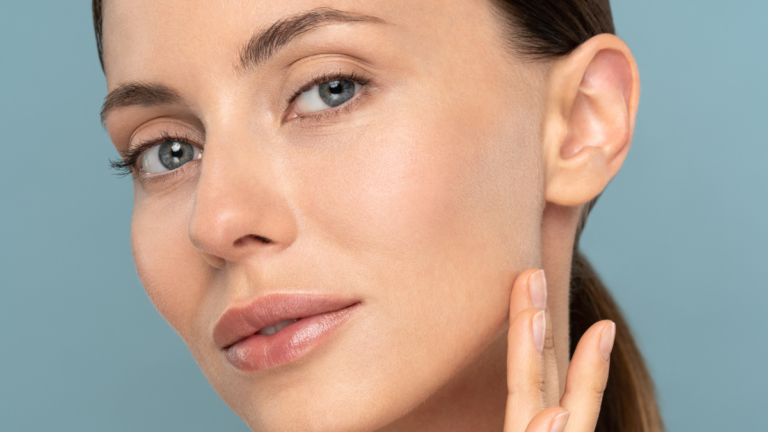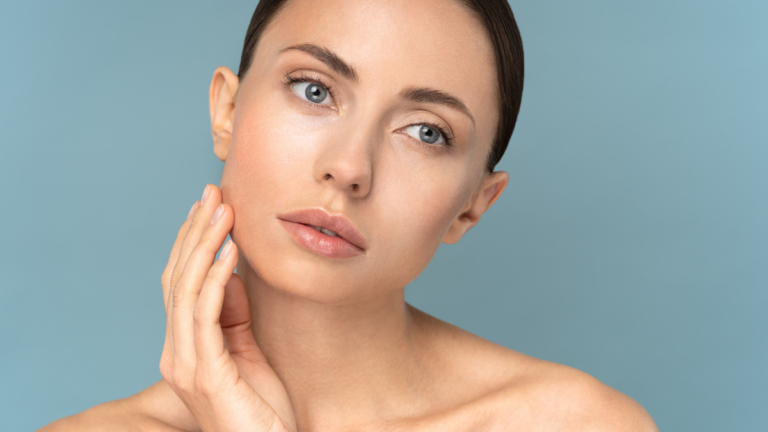
The word ‘facelift’ traditionally conjures up images of surgery, incisions and a dramatic change in appearance. However, non-surgical facelifts are now stealing the spotlight and for good reason!
These offer a much more subtle approach to restoration, working with the skin and underlying tissues to improve firmness, definition and facial structure. At the same time, they preserve the features which make you look like you!
Rather than changing facial expression or dramatically altering facial proportions, these treatments aim to encourage the skin’s own repair processes, gradually improving firmness and definition.
The non-surgical facelift from Deserve Aesthetics uses advanced radiofrequency technology to heat deeper layers of the skin, stimulating collagen and elastin production while tightening existing collagen fibres. It is designed to lift, firm and smooth the skin while maintaining natural facial movement and expression.
Instead of focusing on ‘lifting’ the face mechanically, it is designed to rebuild some of the structural support which ageing gradually takes away.
Your Face Is Losing Structure Long Before It Looks Dramatically Older
One of the less appreciated facts about ageing skin is just how important collagen is to its architecture. Collagen accounts for approximately 70% of the dry mass of skin. Research indicates that collagen density decreases with age. One frequently cited study found that skin collagen tends to decline by approximately 1% per year throughout adult life.
This does not mean everyone suddenly loses exactly 1% of their collagen every birthday. Ageing is influenced by genetics, hormones, UV exposure, smoking and other environmental and lifestyle factors. But the figure illustrates that facial ageing is a gradual structural process rather than something which suddenly begins when someone reaches 40, 50 or 60.
As collagen production and organisation change, the skin becomes less resilient. Elastin, another important structural protein, also becomes less effective. The result can be a gradual loss of firmness, elasticity and definition.
This helps explain why someone can look older even without having deep wrinkles. A change in facial architecture can be just as important as a change in the surface of the skin.
What Makes A Non-Surgical Facelift Different?
Traditional facelift surgery physically repositions and removes tissue to alter facial structure. A non-surgical treatment takes a fundamentally different approach.
The Deserve Aesthetics facelift uses radiofrequency energy to gently heat deeper layers of the skin. This stimulates collagen and elastin production and tightens existing collagen fibres, encouraging the skin to become firmer over time.
Research on radiofrequency therapy has found that heating the dermis can trigger collagen remodelling and the subsequent formation of new collagen, contributing to skin tightening and improved elasticity.
In other words, the appeal of this type of treatment is that, in addition to the skin being temporarily made to look tighter, it encourages biological changes which can progressively improve the skin’s support.
The ‘Natural’ Part Is About How The Result Develops
The word ‘natural’ can be overused in aesthetics, however, in this context it describes how the treatment does not create a frozen expression or dramatically change the patient’s facial proportions.
Instead, the facial treatment stimulates the body’s own collagen production, with results developing gradually as collagen regenerates. The outcome is subtle facial rejuvenation which maintains natural facial movement and expressions.
This gradual development is significant because facial ageing itself happens gradually. A treatment which works by encouraging collagen remodelling can therefore produce a different aesthetic effect from an intervention designed to immediately alter volume or position.
The result is intended to be a fresher, firmer version of the person’s existing facial structure rather than a completely different face.
Why Facial Contours Can Matter More Than Wrinkles
Imagine looking at two photographs of the same person taken ten years apart. You might notice crow’s feet or lines around the mouth, but you may also notice that the lower face appears heavier and the transition from cheek to jaw is less sharply defined.
This is because loss of skin firmness can affect the appearance of the cheeks, jawline and lower face. The Deserve Aesthetics facelift treatment can improve facial contours by helping to define the jawline, cheeks and lower face, while addressing sagging skin.
Improving the quality and firmness of the skin can potentially change how the contours of the face are perceived.
Research into radiofrequency-based rejuvenation also supports this broader effect. A systematic review found evidence of improvements in facial skin laxity and elasticity, as well as changes in facial contouring, although the researchers noted that outcomes vary according to technology and treatment parameters.
Fine Lines Are Not The Whole Picture
Fine lines remain one of the visible signs of ageing which people commonly want to address. As collagen and elastin decline, the skin becomes less able to resist repeated movement and environmental stress.
The non-surgical facelift is intended to soften fine lines and wrinkles by improving the underlying skin structure. Rather than simply treating individual lines, the treatment aims to improve firmness and smoothness across the treated area.
This distinction is useful because facial ageing rarely consists of one isolated wrinkle. Several changes can happen simultaneously. For example, the skin becomes thinner or less elastic, contours become softer, pigmentation may become more uneven and the surface may lose some of its smoothness.
A treatment focused on collagen and elasticity therefore approaches ageing from a different direction. It does this by improving the condition of the skin rather than concentrating exclusively on individual lines.
The Deserve Aesthetics facelift takes approximately 45 to 60 minutes and uses local anaesthetic. The treatment is non-invasive and is designed to target ageing skin, sagging, fine lines and loss of elasticity.
Patients may notice an immediate improvement in skin texture and contour, with results continuing to develop over the following weeks as the skin responds.
As with any aesthetic procedure, suitability is individual. A consultation is important to establish whether radiofrequency treatment is appropriate for the degree and type of laxity present and what outcome can realistically be achieved.
Could This Be The Future Of ‘Natural’ Facial Rejuvenation?
Interestingly, treatments aren’t becoming more dramatic. Rather, they are now working subtly with the body’s own biology.
The evidence for radiofrequency is promising, but it is also important not to confuse a non-surgical treatment with a surgical facelift. A systematic review found measurable improvements in facial laxity with radiofrequency technologies, but the results and treatment protocols varied across studies.
This means a non-surgical facelift should be viewed as an option for improving skin laxity, firmness and contour, rather than a direct replacement for surgery in someone with significant tissue descent.
For people with mild to moderate signs of ageing who want to preserve their existing appearance, however, the concept is compelling.